
Killing and Conscience
For Whom the Bell TollsThis flow compares Anselmo’s moral resistance to killing with Jordan’s practiced necessity and their shared exposure to its human cost.
increasing Bearing strength in each event
 decreasing
Bearing strength in each eventdecreasingThe Hunter’s Distinction
Animals and Human Beings
Anselmo’s past
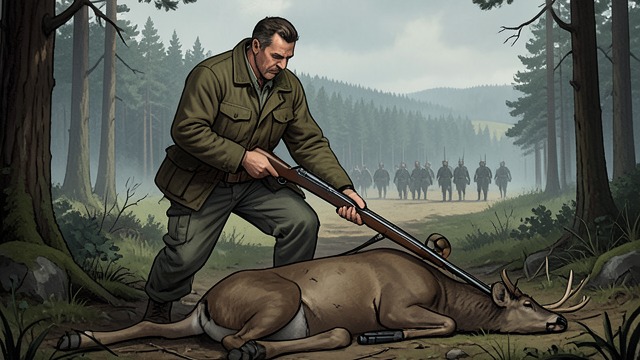
Anselmo remembers hunting animals with pleasure but says that killing a person leaves no good memory. He sees the human hand as resembling an animal’s paw, yet refuses to treat the two deaths as equivalent.
A moral limit
His hunting experience does not make him comfortable with war. It helps him name the difference between killing for sport and killing another person under orders.
Necessity Without Pleasure
The Burden of Action
Acknowledged contradiction
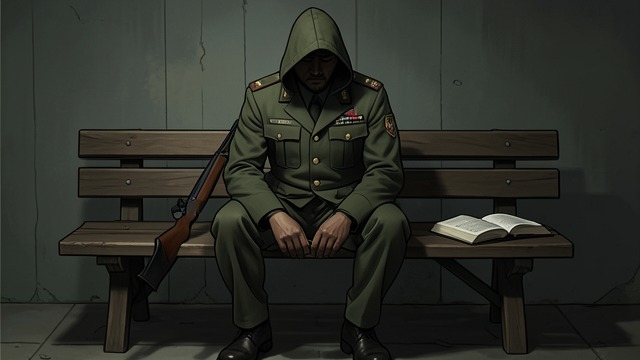
Anselmo admits that he has killed and will kill again, while continuing to regard the act as sinful. He hopes that later service and kindness may offer some form of atonement.
Jordan’s position
Jordan accepts that the war requires killing the enemy. His confidence is practical, but the conversation shows that he has not resolved the moral cost.
The Sentry Is Shot
Conscience in Action
Anselmo obeys
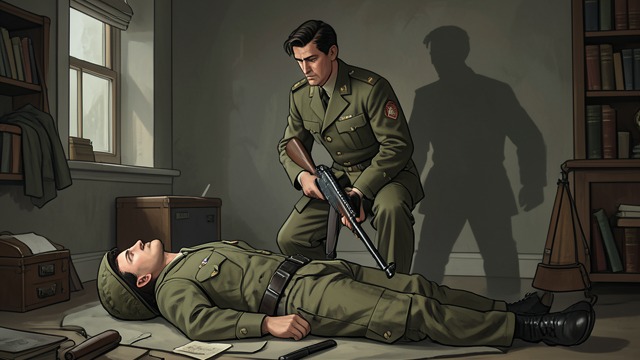
Anselmo shoots the sentry and then fires again to finish him. Afterward he admits the act with visible distress.
No easy purification
Jordan confirms that he also killed a man. Their shared admission does not erase the difference in how each experiences violence, nor does it make the death clean.
The Enemy’s Humanity
Men Across the Line
Recognition
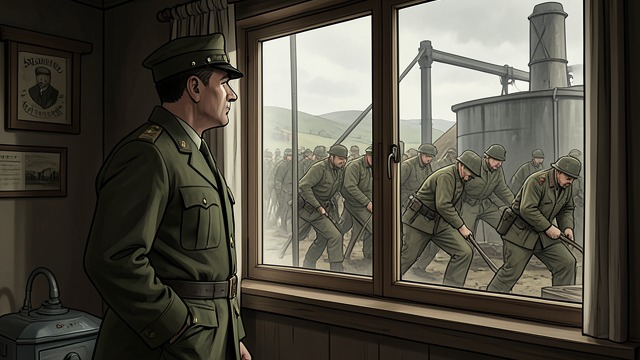
Watching soldiers at the sawmill, Anselmo sees poor men like himself rather than embodiments of an ideology. He believes orders and fear for their families keep them fighting.
The war’s moral trap
His insight does not stop him from taking part in the attack. It makes the necessity harder, because he cannot claim that the enemy is simply inhuman.
The Dead Beside the Bridge
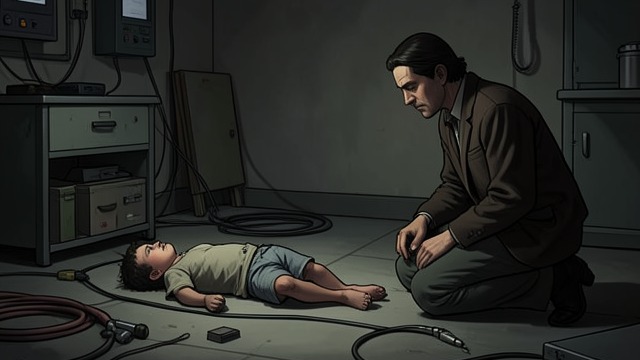
The Cost Remains
A human body
Anselmo dies beside the wire, and Jordan finds him small in death. The practical work of collecting weapons cannot turn his death into an abstraction.
Memory as responsibility
Jordan continues with the mission, but the killing and loss remain part of what he has done. The novel refuses a simple victory that would make the cost disappear.
During the first walk back from the bridge
During the same evening conversation
At dawn on the operation day
During Anselmo’s watch in the snow
After the explosion
